 Nederlands
 Français

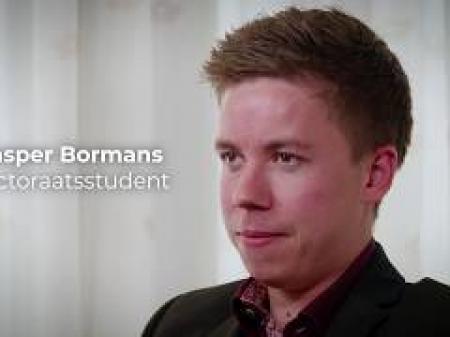

Dr. Kasper Bormans - Scientist in Wonder
Dr. Kasper Bormans (°1987) is a pioneer in the field of communication and quality of life in dementia care. In 2020, he obtained his PhD from KU Leuven under the guidance of the renowned psychiatrist Dirk De Wachter. He consciously applies his knowledge and science to serve society, focusing on improving communication between people with dementia and their environment.
Major Works and Innovations:
- Books: Kasper is the author of successful books such as What Alz?, which delves into the essence of communication, the power of dreams, and the wonder of relationships; Making Time for People with Dementia (2020), a practical guide with 52 ways to continue communicating with people with dementia; and Swinging to the Rhythm of People with Dementia, which explores the Resonance Method to better communicate with people with dementia.
- Game of Imagination: A surprising game that strengthens the bond between people with dementia and their loved ones. The game is particularly effective in connecting generations.
- MemoryHome: An innovative mobile application based on the memory palace technique, developed during his research as a tool for people with dementia.
- The World of Memory: An original project at Museum M in Leuven that centers on the wonder and memories of people with dementia.
Research and Presentations
Kasper has traveled the world for his research, visiting memory labs in Canada and presenting his findings at leading Alzheimer’s conferences in cities such as Berlin, Budapest, Copenhagen, Chicago, Vienna, London, San Diego, Dublin, and Philadelphia. He is a valued keynote speaker and conducts lectures and workshops on diverse topics such as imagination, dementia, memory palaces, mobile applications, and gentle compliance techniques in various sectors, including healthcare, education, and business.
Post-Doctoral Research and Recognition
As a post-doctoral researcher at Maastricht University, Kasper started an intergenerational study in 2021 to improve the quality of life for both children and vulnerable elderly. His focus is on the role of connection, imagination, and wonder in communication with people with dementia. His work received significant recognition, including a visit from His Majesty the King of the Belgians to his exhibition What Alz – From Oh to Awe! on November 22, 2023. For his exceptional contributions to research on communication and dementia, Kasper was named Baron in 2024.
Practical Applications
Despite the fact that 97% of all psychosocial interventions are never implemented, Kasper belongs to the exceptional 3% who successfully bring their methods into practice. In collaboration with major healthcare organizations in Flanders and the Netherlands, he has made new conversation techniques and memory palaces accessible to the general public.
Short Bio
Dr. Kasper Bormans (°1987) obtained his PhD from KU Leuven under psychiatrist Dirk De Wachter and is affiliated with Maastricht University. He is the author of influential books such as What Alz?, Making Time for People with Dementia, and Swinging to the Rhythm of People with Dementia, and developed innovative tools like the app MemoryHome. Kasper is a sought-after speaker at both national and international conferences. In 2024, he was awarded the noble title of Baron by the King of the Belgians for his work.
Latest Work
In his most recent book, Swinging to the Rhythm of Dementia – Better Communication with the Resonance Method, Kasper introduces surprising insights and techniques, continuing to play a leading role in the care for people with dementia.
Research
- Intergenerational Research (Maastricht University): Leveraging the Positive Traits of Children to Alleviate the Burden of Dementia on Society (Ongoing Research)
- PhD in Social Sciences (KU Leuven): Communication Strategies to Enhance Quality of Life in Alzheimer’s Disease / Memory Palaces to Improve the Quality of Life for People with Alzheimer’s and Their Environment (Successfully Completed)
- Master’s Thesis in Management (KU Leuven): The Relationship Between Love for People and Brands (Distinction)
- Master’s Thesis in Communication Sciences (KU Leuven): Unconscious Influence through NLP in Advertising (Highest Distinction)
- Bachelor’s Thesis in Philosophy/Psychology (KU Leuven): Why We Enjoy the Pain of Others
download the scientific research here
Publications
- 'What Alz?' About the core of communication, the power of dreams and the wonder of relationships (Van Halewyck publishers, 2014)
- 'The Game of Imagination' Activate your fantasy (Davidsfonds, 2016)
- 'A new memory palace' Give memories a place with people with Alzheimer's and dementia (Lannoo, 2017).
- 'Making Time for People with Dementia' 52 Ways to Continue Communicating (Lannoo, 2020)
- 'Swinging to the Rhythm of People with Dementia' Better Communication with the Resonance Method (Lannoo, 2024)
Statement
DEMENTIA IS MORE THAN MEMORYLOSS
September is “Dementia Month.” In Belgium, more than 200,000 people have dementia, and the number is rising alarmingly. Often, the disease has been silently progressing for more than ten years before a diagnosis is made. Every four seconds, somewhere in the world, someone hears the news that they have dementia. This bad news affects not only the person diagnosed but also those in their immediate environment. At that moment, they rely on prior knowledge and indirect experiences, which are heavily influenced by a succession of negative reports in the media and society. When was the last time you heard or read something positive about dementia?
In my work as an academic researcher and volunteer in this field, I see, alongside the sadness, loss, and suffering, another side to the story: the essence of communication, the power of dreams, and the wonder of relationships. Very little attention is paid to this in the media or public discourse. The lack of tools and positive impulses offers no perspective for the future when suddenly confronted with the disease. We become frozen in loneliness. Why do we primarily play memory games with people whose memory is declining? Their loss is guaranteed.
For example, if we play a positive game centered on imagination, the benefit lies not in the gameplay itself but in the encounter. In everyday conversations, we worry when memories are no longer factually accurate. Yet we can also learn that what matters most is that we communicate, not what we communicate. This is a completely different approach.
When I approached the media last year during this same period with a positive message, a journalist literally told me, “We already reported something positive about dementia three months ago. We can’t do that all the time.” In the same period, however, the following headlines dominated the news in just two weeks: “Young caregiver denounces appalling conditions in elder care” and “Six caregivers fired after sharing embarrassing photos of people with dementia.” Such streams of negative reports are apparently considered normal—they receive more attention than they deserve.
The one-sided focus on dementia as memory loss too quickly leads us to a scenario of helplessness. There is currently no medication or training that can reverse this decline in our brains. However, dementia is more than memory loss. There is also communication loss. It is heavy for the person themselves, but also for family, friends, and caregivers, who face an increased risk of developing depression. These people are the “shadow victims” of the condition. If we step into that shadow in time, we gain a more nuanced picture than what we learn from conventional media. There is also humor, connection, authenticity, warmth, imagination, intense communication, and hope. Some care homes focus on this explicitly: rooms with views of playing children, a mailbox deliberately placed further into the front garden to give everyone an extra reason to get up… Dementia is not about saying “goodbye,” but about saying “hello.” Perhaps this month we can make an extra effort to share not just a piece of cake with those involved but also a story, an experience, and a feeling.
In this regard, we can learn more from half a million dedicated caregivers and professionals than from one-sided complaint stories that leave little room for the nuanced perspective we will need when we are ourselves confronted with dementia. And sooner or later, we all will be.
Dr Kasper Bormans (°1987) obtained his PhD from KU Leuven under psychiatrist Dirk De Wachter and is affiliated with Maastricht University. He is the author of influential books such as Wat Alz?, Making Time for People with Dementia, and Swinging to the Rhythm of People with Dementia, and developed innovative tools such as the MemoryHome app. Kasper is a sought-after speaker at both national and international conferences. In 2024, he was awarded the noble title of Baron by the King of the Belgians for his work.